
I recently came across the following poem in my poetic attic and it made me think about some of the challenges of self-help and self-improvement. I touched on this topic on my First Steps to Mental Health page.
Self-Assembly

I must pull myself together,
learn to overcome the anxiety I feel
in the big DIY stores,
surrounded by gadgets and products
whose purposes I can only
hazard a guess at.

Hazard, that’s the right word –
who wants to spend the weekend
doing things for which you need all sorts
of protective equipment?

This is the retail pleasure zone,
hundreds of projects to improve
my home and garden,
hundreds of reasons to feel guilty
and inadequate.
Why can’t they leave me alone?
I will approach this topic by disassembling the poem stanza by stanza to highlight the key issues.
I
The first line contains what is known as a moral imperative – the emphasis on must. This sits alongside other imperatives such as should, ought, and their negative counterparts should not and ought not. These small words carry a lot of weight, whether they arise from our own thoughts/internal dialogue, or spoken explicitly by others, or we imply them from the words or actions of others.
In cognitive behaviour therapy (CBT), it is often helpful for clients to recognise these imperatives and to then question their validity. Where are the messages coming from? Have I understood them correctly? What would happen if I “disobeyed” them? Often, they serve others better than they serve ourselves.
The second line of the first stanza mentions learning. I am a strong believer (ok, that is a cognitive concept!) in the importance of learning when it comes to understanding human psychology and the role played by learning principles in the development and resolution of mental health problems. One day I will provide more detailed posts on this topic. For now, it refers to learning how to overcome anxiety. There are behavioural approaches (such gradual exposure to the feared situation and developing skills around bringing down your level of arousal through breathing and other relaxation techniques) and cognitive strategies such as re-evaluating the threat and your capacity to deal with it.
My fears around DIY stores are about finding the right things and not looking foolish or inadequate – you see these confident people pushing trolleys laden with huge pieces of timber or plasterboard or whatever, and I have a small tin of paint. In relation to self-help, the fears could be around making changes in your behaviour and thinking, wondering if it is the best thing to do, worrying that you will not be successful. And, like me on occasions in the DIY arena, fearing that you will make such a mess of it that you have to call in a professional.
II
The second stanza focuses on hazard, the sense of threat and danger. There are so many things that can cause you harm – toxic chemicals, sharp blades, power tools that have the power to overpower you. What hazards are there in the psychological self-help arena? Mostly those noted above in relation to fear. It is important to be aware of the risks attached to self-help. The key is to develop a good understanding of what will work best for you, and paying attention to the sources of advice and information. Also, like the instruction leaflets accompanying some packs of self-assembly furniture, it is often advised that it may be a two-person task – don’t be afraid to seek support from family or friends when you are thinking about embarking on a course of self-help. Similarly, you need to make an honest assessment about whether self-help is the best course of action for you. There is no shame in admitting that the task may be beyond you. The majority of DIY projects are beyond me.
III
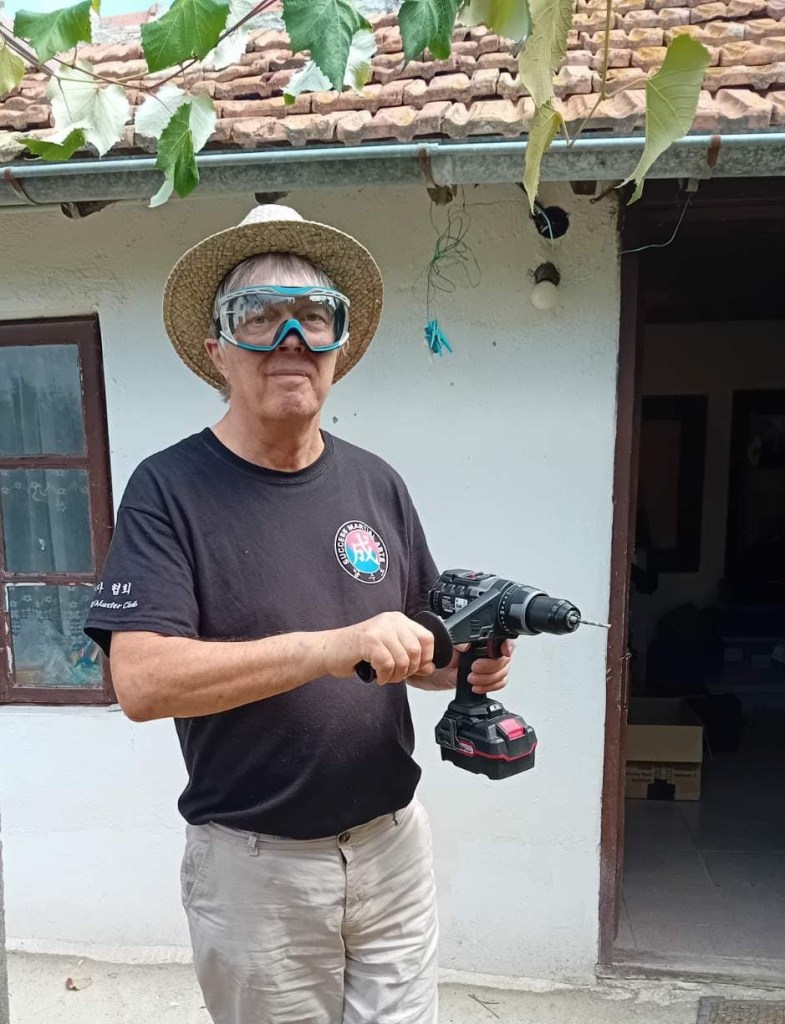
The third stanza describes the huge array of products available and the hundreds of different projects you could undertake to improve your home and garden. None of us is perfect, so we can all recognise many ways in which we could improve ourselves. But should we? Must we? Sometimes it is about learning to accept ourselves as we are, with no pressure to change. We do not need to feel inadequate or guilty. It is what feels right for us.
I would add a warning label here. If you are experiencing problems in key areas of your life such as personal relationships, work, education or overall mental and physical health, then at least thinking about a self-improvement project might be a good starting point when the time is right.
One day, I might get around to putting up that shelf…
*
 Understand Yourself Better