Blog

Self-Help or DIY?

I recently came across the following poem in my poetic attic and it made me think about some of the challenges of self-help and self-improvement. I touched on this topic on my First Steps to Mental Health page.


Self-Assembly

I must pull myself together,
learn to overcome the anxiety I feel
in the big DIY stores,
surrounded by gadgets and products
whose purposes I can only
hazard a guess at.

Hazard, that’s the right word –
who wants to spend the weekend
doing things for which you need all sorts
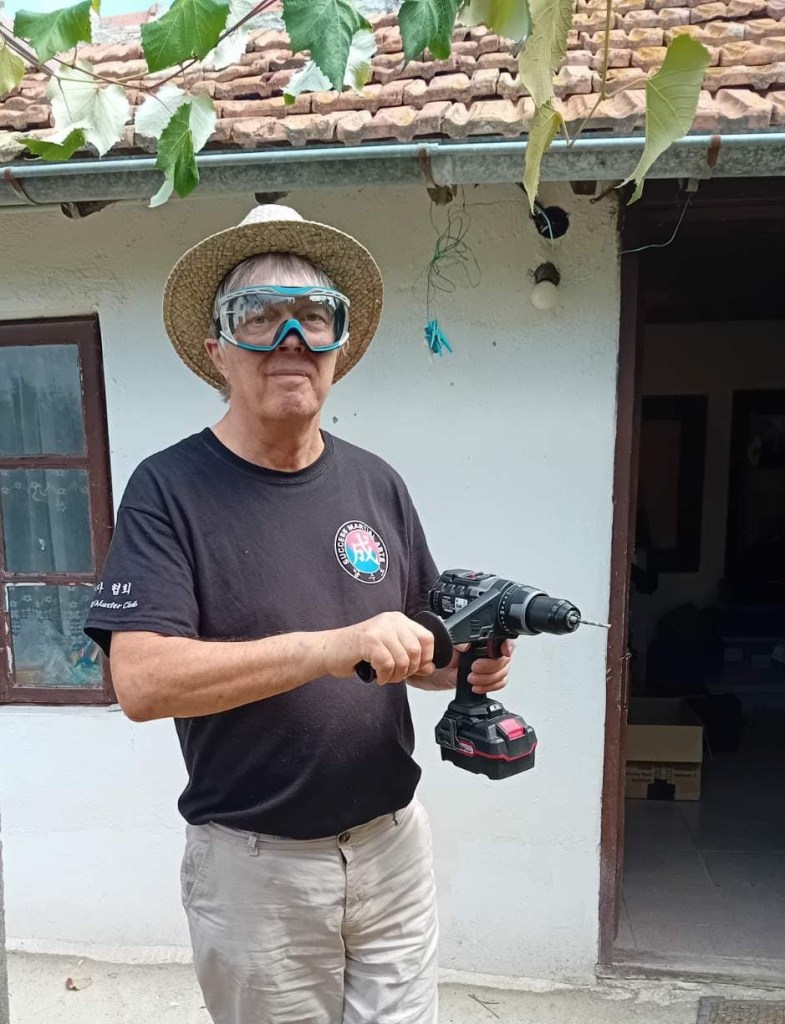
of protective equipment?

This is the retail pleasure zone,
hundreds of projects to improve
my home and garden,
hundreds of reasons to feel guilty
and inadequate.
Why can’t they leave me alone?

I will approach this topic by disassembling the poem stanza by stanza to highlight the key issues.

I
The first line contains what is known as a moral imperative – the emphasis on must. This sits alongside other imperatives such as should, ought, and their negative counterparts should not and ought not. These small words carry a lot of weight, whether they arise from our own thoughts/internal dialogue, or spoken explicitly by others, or we imply them from the words or actions of others.


In cognitive behaviour therapy (CBT), it is often helpful for clients to recognise these imperatives and to then question their validity. Where are the messages coming from? Have I understood them correctly? What would happen if I “disobeyed” them? Often, they serve others better than they serve ourselves.

The second line of the first stanza mentions learning. I am a strong believer (ok, that is a cognitive concept!) in the importance of learning when it comes to understanding human psychology and the role played by learning principles in the development and resolution of mental health problems. One day I will provide more detailed posts on this topic. For now, it refers to learning how to overcome anxiety. There are behavioural approaches (such gradual exposure to the feared situation and developing skills around bringing down your level of arousal through breathing and other relaxation techniques) and cognitive strategies such as re-evaluating the threat and your capacity to deal with it.

My fears around DIY stores are about finding the right things and not looking foolish or inadequate – you see these confident people pushing trolleys laden with huge pieces of timber or plasterboard or whatever, and I have a small tin of paint. In relation to self-help, the fears could be around making changes in your behaviour and thinking, wondering if it is the best thing to do, worrying that you will not be successful. And, like me on occasions in the DIY arena, fearing that you will make such a mess of it that you have to call in a professional.

II
The second stanza focuses on hazard, the sense of threat and danger. There are so many things that can cause you harm – toxic chemicals, sharp blades, power tools that have the power to overpower you. What hazards are there in the psychological self-help arena? Mostly those noted above in relation to fear. It is important to be aware of the risks attached to self-help. The key is to develop a good understanding of what will work best for you, and paying attention to the sources of advice and information. Also, like the instruction leaflets accompanying some packs of self-assembly furniture, it is often advised that it may be a two-person task – don’t be afraid to seek support from family or friends when you are thinking about embarking on a course of self-help. Similarly, you need to make an honest assessment about whether self-help is the best course of action for you. There is no shame in admitting that the task may be beyond you. The majority of DIY projects are beyond me.

III
The third stanza describes the huge array of products available and the hundreds of different projects you could undertake to improve your home and garden. None of us is perfect, so we can all recognise many ways in which we could improve ourselves. But should we? Must we? Sometimes it is about learning to accept ourselves as we are, with no pressure to change. We do not need to feel inadequate or guilty. It is what feels right for us.

I would add a warning label here. If you are experiencing problems in key areas of your life such as personal relationships, work, education or overall mental and physical health, then at least thinking about a self-improvement project might be a good starting point when the time is right.

One day, I might get around to putting up that shelf…


*

Demi-Sec January

This time last year I was coming to the end of my fourth or fifth Dry January. I decided to take on the challenge because the previous year I lost control of my usual drinking rules. It was not that I spent the year in a state of permanent intoxication, rather I adopted – to put it mildly – a “screw it” mentality. There were only 26 days on which I did not have an alcoholic drink, due to my carefree attitude and a number of emotional challenges. Often, my drinking would consist only of a can or two of beer and/or a glass or two of wine – hardly a non-stop party of drunken bawdiness.

My decision to take on Dry January 2025 was an attempt to regain control of my drinking and to reinstate to my old drinking rules – i.e., at least 2 days of abstinence per week. In this I was successful – I had 151 days of abstinence (approximately 41.4% abstinence over the year). It is probably a bit sad that I keep such detailed records. This was borne of my career in psychology being mostly in the field of alcohol and other substance misuse. This alerted me to the extensive harm caused by excessive drinking and the ease with which one could slip over the line from control to loss of control.

Another factor influencing my decision was the slow and sad acknowledgement that I have somehow entered the “elderly” population, which during my teaching of trainee clinical psychologists I was at pains to point out carried increased risks when it came to alcohol consumption. Who knew I would join their ranks?! The risks arise from changes in metabolism (the liver finds it more difficult to break down the alcohol), effects on cognitive function (“Where did I put that glass of wine?”), increased risk of falling over, and multiple harmful effects on physiological health (e.g., blood pressure).

Given my success in re-establishing my drinking rules throughout 2025, I decided not to take on the Dry January challenge for 2026. The decision was also shaped to some extent by further emotional challenges as the year got under way. I am not saying that drinking is a solution to these life problems, but it is a pleasure and temporary refuge that I value – and respect.

So, my compromise was to instigate Demi-Sec January – literally translated as “half dry”. I introduced the rule that I would have at least 3 days of abstinence per week. I have achieved this thus far – in fact, to date, I have hit 50% abstinence. I am not sure if I will continue this for the rest of the year. However, the original 2 days of abstinence per week will remain in place. At least you have been spared my daily posts about alcohol that I posted throughout last January! Which is not to say that there will not be further posts on my progress…

I am a Well-Being Hypocrite

Oh, that sounds a bit harsh. However, there is certainly an element of truth in this. I was reading the page I wrote on here about keeping well when I realised that I am not that good at following my own advice. Last night I was watching the start of the third series of Squid Game on Netflix while enjoying a glass of wine – red, of course, to go with the theme of the show.

Neither activity was conducive to a good night’s sleep. Alcohol may help you drop off to sleep easily, but it disrupts the quality of sleep, so you tend to be more restless and wake up earlier than is good for your mind and body. The effects of course are dose-dependent.

As for Squid Game, well it is psychologically tense and rather graphic in its depiction of violence. Let’s just say that Episode 2 had a lot of ‘red wine”. The over-stimulation of the TV show battles with the sedating effects of the alcohol as you try to drift off to sleep. This combination of stimulant and sedative is well-known in the field of drug addiction – note, for example, the craze for Purple Hearts in the 1960s and Speedballing (mixing heroin and cocaine) more recently. It seems that sending our brains mixed messages can be very rewarding – BUT mixing heroin and cocaine significantly increases the risk of fatality, so this is not an endorsement!

The reference to mixed messages is a nice segue to looking at some of the reasons we may not always act in our own best interests when it comes to well-being. The first point to consider is our friend cognitive dissonance – how we cope with the mis-match between our beliefs and our behaviour. We all eat the wrong things, drink too much, don’t take enough exercise and so forth, in the knowledge that we are not doing what is best for ourselves. Except, at the time, this is what we are exactly choosing to do, so it must be the best thing to do right now! We employ all sorts of mental tricks to reduce this dissonance/discomfort. We are mostly driven/motivated by the availability of immediate rewards – all that weight-loss, muscle-building, heart health stuff takes too long to bring the undoubted, but delayed, rewards. This is who we are. Just try to be aware of your own thinking processes – those that give you permission to have the chocolate fudge cake, and those that weigh-up the value of those longer-term goals.

A second consideration relates to our self-esteem. We have to believe that we are worthy of well-being, that we have the right to be happy and healthy. So many people I have worked with over the years have really struggled with these issues. Often, the source of negative beliefs about yourself lies in early childhood experiences, which are sometimes triggered by traumatic events later in life. To make good choices for yourself can sometimes mean putting your needs above those of others. Again, many people struggle with this, not wanting to offend or upset others, or being afraid of looking selfish. We are talking here about assertiveness.

To conclude, I am indeed a well-being hypocrite. I feel no shame in this. It puts me with humans, not with the robots. I provide information and suggestions about how one can improve and maintain well-being. There are no moral imperatives. No one has to eat purple broccoli (a tongue-in-cheek look at dietary advice for runners). And defo no purple hearts.

Keep well in the ways that work for you!

The Elephant in the Room

She: I think it is time we talked about the, you know, the elephant
in the room.

He: I wondered when you would get round to mentioning that.

She: It has been on my mind a long time. I was waiting for you to
explain, but it looks like I will be waiting forever

He: Explain? I don’t understand.

She: What do you mean, you don’t understand? I’m talking about the
elephant in the room.

He: I know what you’re talking about, but I thought it was yours.

She: What do you mean you thought it was mine?

He: The elephant. I thought it was your elephant.

She: Mine? Why would I need an elephant?

He: I don’t know. I thought it best not to ask. As an aide-memoire
maybe.

She: It’s not my elephant. I thought it was yours.

He: Mine? Why would I need an elephant?

She: I’ve no idea. I thought it might have been a “man thing”.

He: Let’s get this straight. It’s not your elephant. It’s not my
elephant. What the hell is it doing here?

She: You mean that for months we have organised our lives around a
huge animal that had nothing to do with either of us? Oh, that’s just
brilliant. Day after day having to edge round the sides of the room to
get from one end to the other, watching TV through its legs as we
balanced our meals on trays, ever fearful of it having a “little
accident”. Not to mention the huge increase in our food and water bills.
What are we going to do?

He: Entice it out with a row of buns and never mention it again?

In the End

Like all good stories, Dry January had a beginning and an end. I have catalogued my 31 days of abstinence from alcohol in this series of posts. For someone who set out not to drink, I have devoted more than 23,000 words to the topic and spent over a hundred hours researching and crafting these posts. We have looked at the history of alcohol and drinking, how wine, beer and spirits are made; what strange things are added to our tipples (including some guidance on

Continue reading “In the End”