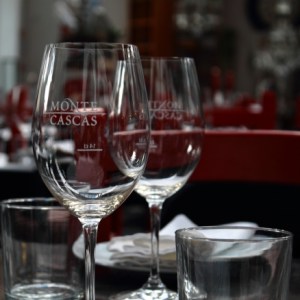
I have returned to my photograph of empty glasses for the featured image today. My thinking was that they symbolised both my state of mind and my physical energy levels. I had no idea what topic I would choose for today’s post. The posts over the past few days have entailed a lot of research on my part and they were pretty heavy in places. My physical energy levels are quite low today as well. I thought that cutting out alcohol would lead to an increase in zest, but maybe this has been compromised by a bug or just the passing of the years. Sadly, I will not be able to follow Brigitte Bardot’s example – “Champagne is the one thing that gives me zest when I’m tired”. Maybe a twist of lemon is what I need.
We all know that caffeine can give a boost to our concentration and energy, but does it help us to sober up after drinking alcohol? Well, as an undergraduate I had the pleasure – literally! – of exploring ways to increase the rate at which alcohol is metabolised. Previous research suggested that fructose (fruit sugar) might be the answer. Armed with a bottle of vodka, fructose, and an alcometer (breathalyser), I sat in my little cubicle to test it out. To no avail.
That led me down another path – exploring the interactions between caffeine and alcohol. It was not difficult to find subjects for my experiment, even though some were randomly assigned to the control (placebo) group – where they were given Russian tonic in a glass whose rim had been smeared with vodka. I mentioned this trick in an earlier post – how to throw a cheap party!
My results showed that caffeine does not sober you up – there was no effect on the rate at which levels decreased. There is an important difference between how you feel subjectively and what is measured objectively, allowing for the fact that people with a high behavioural tolerance to alcohol will not behave as drunkenly (e.g., slurred speech, unsteadiness of gait, recklessness) as less hardened drinkers with the same blood alcohol level. This obviously has implications for driving under the influence (younger drivers in particular with alcohol levels below UK limits are still at increased risk of being involved in an accident than when sober). Even if we look at the same blood level of alcohol in the same person there are differences in psychomotor performance (tasks needing eye-hand coordination, not necessarily driving a motor, just to confuse things) at different times. Imagine a plotted curve – alcohol levels go up during consumption, reach a peak, and then decline. The level midway up occurs again on the downward part of the curve, but in this latter case fatigue becomes an additional factor.
Anyway, I started out not knowing where I was going with this. My initial thoughts around the first paragraph were to write about different types of beer and wine glasses. Let’s put that on the rack for now and perhaps come back to it in a later post. So, to the main findings of my amazing coffee and alcohol experiment (which actually got published thanks to my supervisor Dr Geoff Lowe). The subjects who had both alcohol and caffeine actually performed worst on some of the tasks – they made significantly more errors. We know that people who are clearly under the influence tend to overestimate their competence in a range of tasks, including driving. But you can’t say that about this blogger, at least not this month!
I hope this has been a lighter but still interesting read. Keep safe and well, and please stop by tomorrow for more ramblings.
Alcohol Trivia Quiz
Yesterday’s answers:
1. Horatio Nelson. (There were dissenting voices at the time who said it should have been rum).
2. Will accept Marvin Gaye, Gladys Knight and the Pips, and Credence Clearwater Revival.
3. Perry Como! [perry = pear cider]
Today’s questions:
1. How many bubbles in a standard bottle of Champagne?
2. What is an oenophile?
3. Which 18th century artist made the engraving/print “Gin Lane”?

 Understand Yourself Better